“True and total education should result in the complete development of the individual, and his or her realisation of Total Consciousness.”
-Swami Isa
Education for Total Consciousness
Overview
Education for Total Consciousness (ETC) is a holistic educational system designed by His Holiness Jagadguru Swami Isa to nurture the total development of human beings, endowing them with the knowledge, skills, self- and universal awareness to live to their fullest potential.
ETC addresses a critical gap in conventional education: the overemphasis on external knowledge while neglecting the cultivation of humane qualities.
It provides the methodology of integrating objective knowledge (about the world) and subjective knowledge (self-awareness) seeking to bring about a profound and balanced form of human development. ETC supports the development of self-awareness, emotional balance, concentration, motivation, intellectual ability, ethical reasoning, and social responsibility. This teaching methodology aims to make learners capable of conscious and sustainable actions, addressing the interrelated social, economic, technological and environmental challenges facing future generations.
Rather than an institutionalised training to go through during a defined period, ETC is a lifelong process, from the first breath to the last a continuous refinement of the individual in his or her path towards reaching the ultimate aim in life: to find lasting happiness!
The teacher’s role expands beyond delivering topic knowledge. They develop a deeper understanding of each learner and of the wider significance and relevance of the topics being learned. This can create more joy in the teaching process as well as more meaningful and positive teacher–student relationships. Parents are encouraged to actively engage in their child’s learning process to create greater continuity in the student’s educational experience.
ETC offers a practical framework for rethinking education itself—bringing together academic learning and human development within the same educational process. It can be adapted to different curricula and cultural contexts without requiring education systems to abandon their existing academic foundations.
I-Theory: The Foundation of ETC
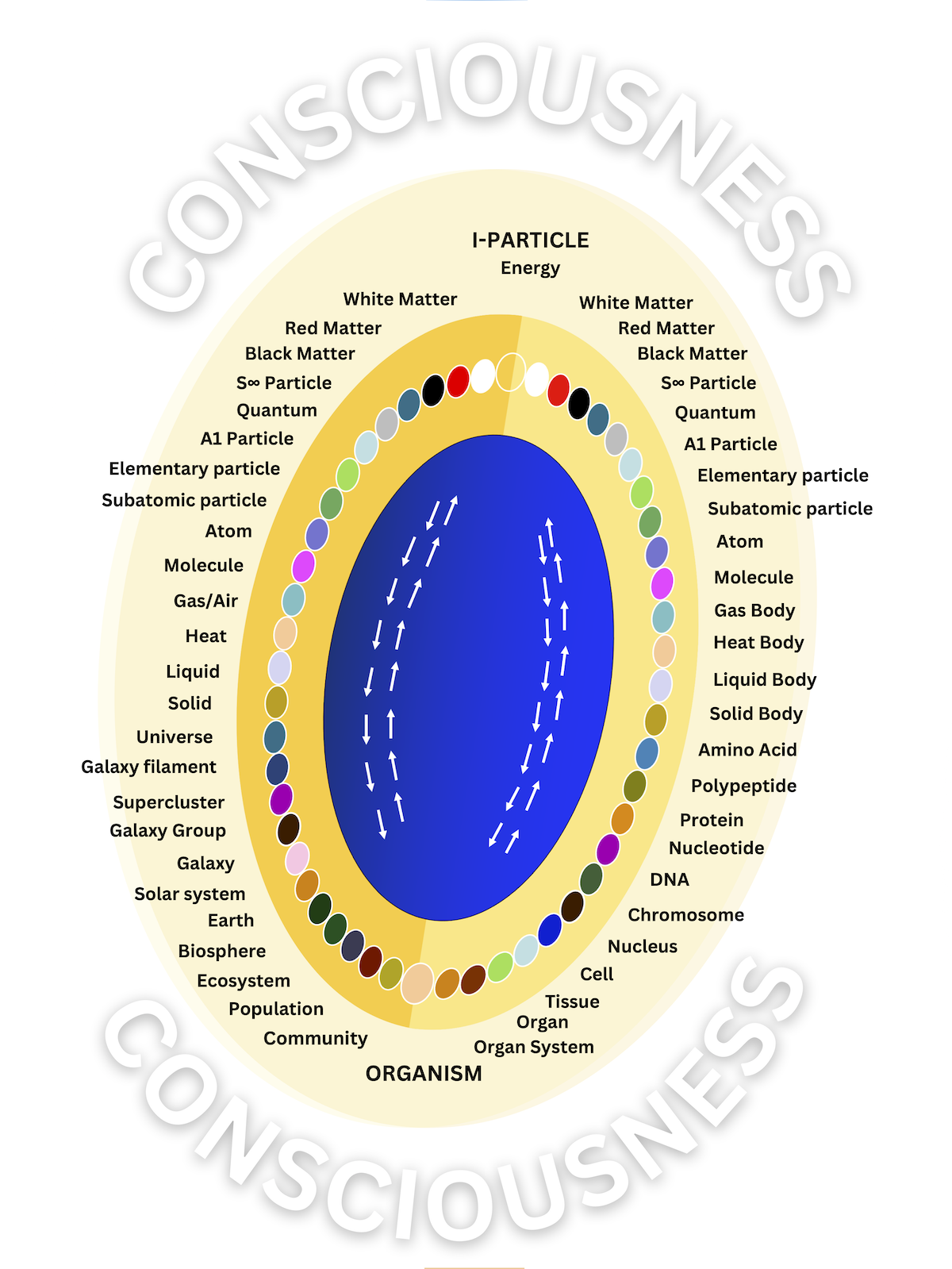
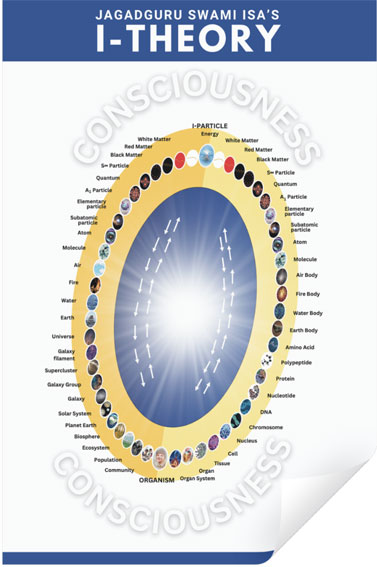
The I-Theory diagram
Swami Isa’s I-Theory (2010) serves as the foundational scientific framework of ETC and as one of its principal teaching aids. It provides a framework for understanding the composition of matter, the inter-relatedness of different disciplines, as well as the relation between the object and the subject.
ETC in Practice
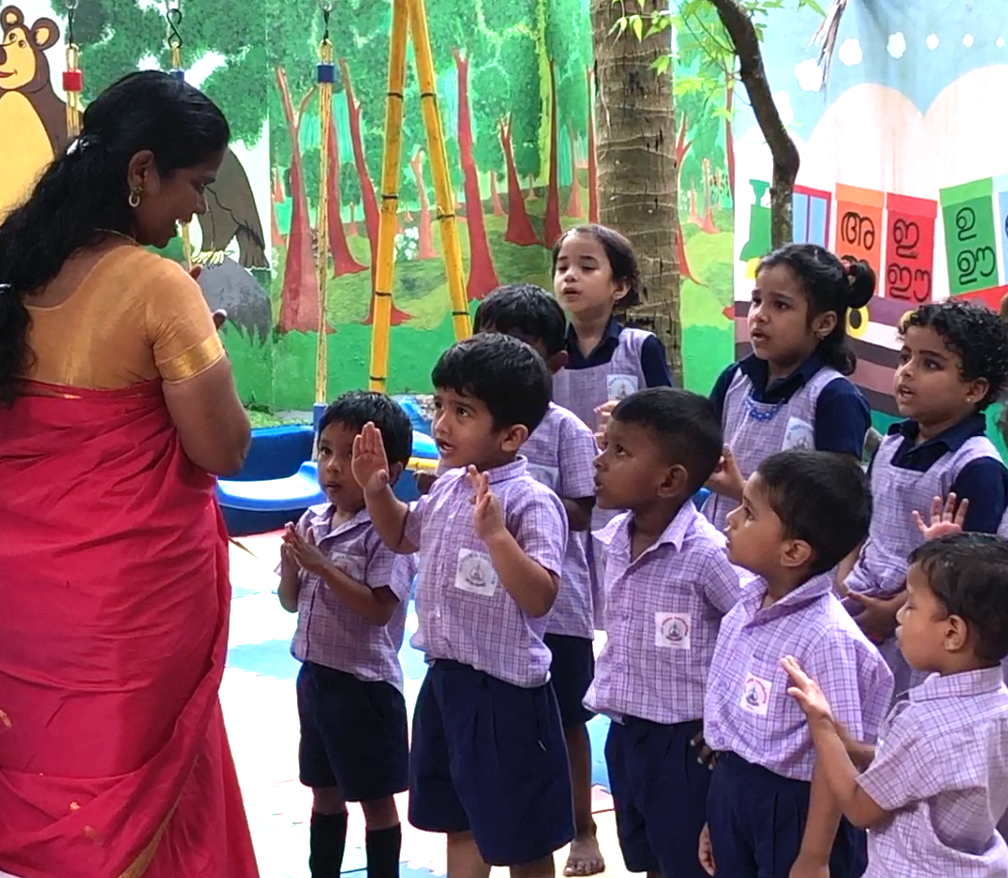
The Isa Viswa Vidyalayam is an ETC pilot school established by Swami Isa in 1998 in Thiruvananthapuram. The school is a thriving community characterised by the creative atmosphere of continuous joy in learning in the integrative method of ETC. Through this, students, teachers and families alike benefit from an ever-deepening experience of unity.
Learn more about the Isa Viswa Vidyalayam→
Evidence & Research
Observed outcomes at the ETC school, Isa Viswa Vidyalayam, include:
- Enhanced student self-awareness, concentration, and emotional regulation
- Stronger ethical reasoning, empathy, and social responsibility
- Improved teacher-student-parent engagement and classroom satisfaction
- Increased student motivation and holistic development
Independent research (Mini P.I., 2025) comparing ETC to Constructivist schooling in Keralam, India, shows that ETC students experience higher levels of emotional engagement, physical vitality, self-awareness, and balanced self-identity, without compromising intellectual competence. These findings support the effectiveness of holistic integration in education.
Students of Isa Viswa Vidyalayam visiting community members in need
History & Present-Day Influence
Emerging from his lifelong reflection on the purposes of education and personal experiences of enlightenment, Swami Isa developed the Education for Total Consciousness (ETC) philosophy in the 1980s and 1990s. Over the years, ETC principles have influenced aspects of India’s National Education Policy (NEP 2020), including holistic learner development, experiential learning, arts integration, multidisciplinary learning, the role of teachers, skill development, integrated curricula, and innovative assessment methods.
- In an article, Prof. Dr. K. Rajeswari, professor of education, examined the correspondence between the principles of ETC and the vision, aims, and pedagogical approaches of NEP 2020.
- Read the article →
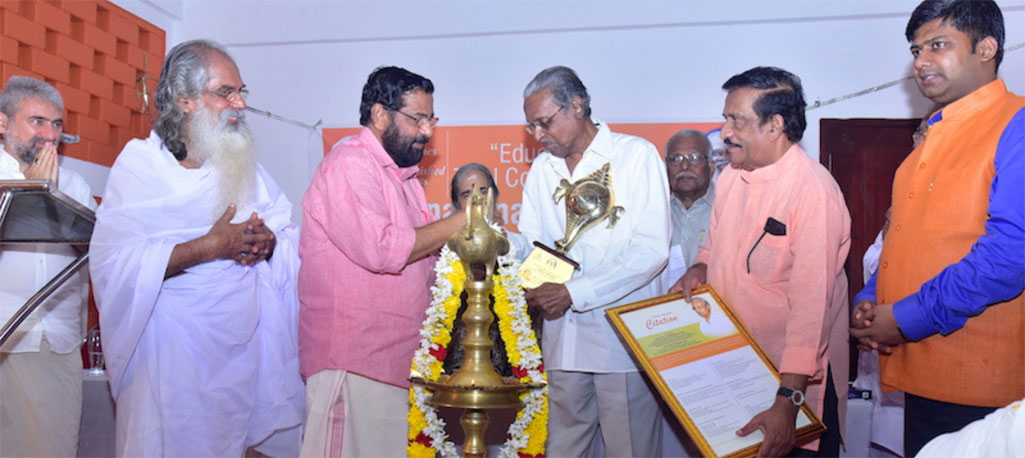
Dr. A. Sukumaran Nair receiving the IVPT’s Vidya Award from Minister for Tourism Kadakampally Surendran.
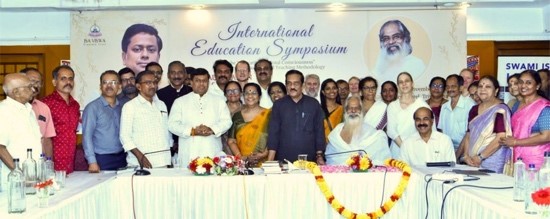
Swami Isa, ETC founder, and the Indian Minister of State for Education Sukanta Majumdar with distinguished educationists.
How can I learn more?
Videos and Multimedia
1. Education for Total Consciousness
A concise, engaging overview of ETC philosophy and the great vision behind it. Recommended for first-time viewers
2. What is ETC? Interview with an ETC Trainer
A first-hand explanation from Prof. Lalitha Santhakumar of what ETC is, its methodology, and its benefits. Ideal for educators and new visitors seeking an introduction.
3. Swami Isa’s Worldview on Education - Talk by Dr. C.V. Ananda Bose
A visual presentation of Swami Isa’s principles and ETC’s relevance to education policy, illustrating broader societal impact by the former Governor of West Bengal. Professional and policy-oriented perspective.
Books & Publications

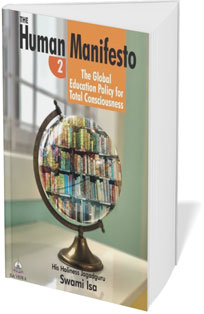
(2023, English language)

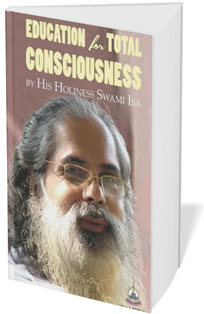
(2016, English language)

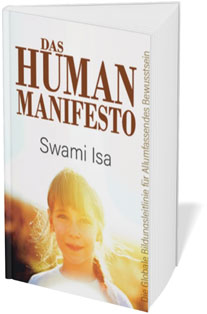
(2025, German language)

(2013, Malayalam language)

(2023, English language)

(2023, English language)

(Poster)
Interested in Implementing ETC?
If you are interested in becoming an Education for Total Consciousness teacher, learn more about our programs in ETC Teacher Education and Capacity Building.